
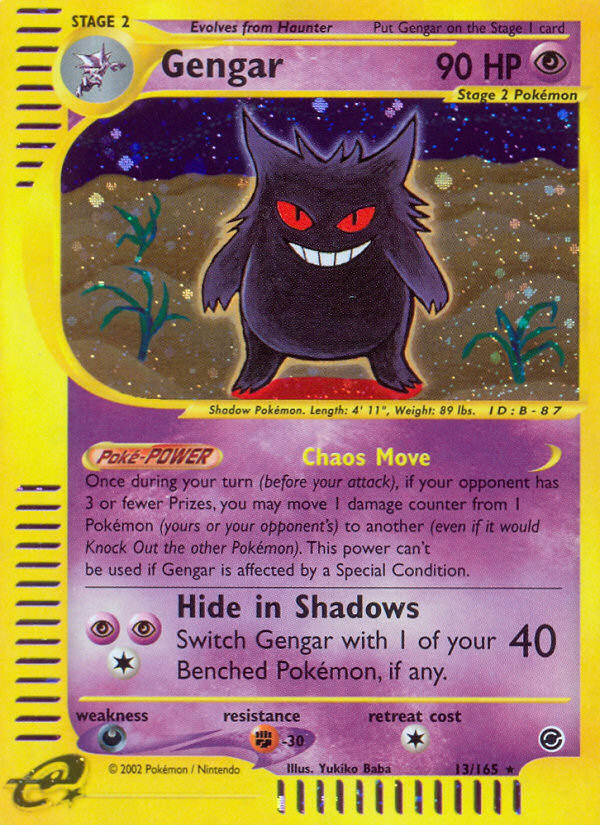
GengarExpedition Base Set · #13/165 · Rare Holo · 2002
The Hoshino Verdict
What this card’s market is actually doing — scored, stated and kept current.
Hoshino recorded 167 confirmed sales of this card in the last 12 months across 5 venues in North America and Southeast Asia. We hold enough sales to describe the market, but not a continuous price history long enough to measure a move against — so we do not report one. PSA has graded 2,449 copies of it, 84 of them Gem Mint 10 — a 3.4% gem rate (CGC 223, BGS 204 further). The most recent sale we hold is 5 days old.
Why is it expensive? It prices in the top 1% of the catalogue because only 84 copies have ever reached PSA 10 of the 2,449 PSA has graded and it is a rare holo from Expedition Base Set (2002).
Verdict recomputed 10m ago · it changes as the market does.
Gengar is card 13 of 165 in Expedition Base Set, released in 2002 as part of the E-Card series. It is a Rare Holo card, illustrated by Yukiko Baba.
PSA reports 2,449 graded copies, 84 of them Gem Mint 10 (CGC 223, BGS 204 further). We hold 170 confirmed sales on record for this card across 7 venues in 2 regions — every price on this page traces back to them.
Descriptive market data, not investment advice. The Hoshino Score measures how deep, liquid, widely-traded, dear and scarce this card’s market is from sales and population records we hold. It is not a forecast, not a recommendation, and not a rating of this card as an investment.
Price by grade
What each grade’s real sales say — median of what actually sold.
Each grade is priced on the median of its own real sales — never averaged across grades, and never across printings. A 1st Edition, Shadowless or No Rarity copy is a different market from the ordinary print, so it gets its own row; where a grade holds sales of more than one printing and we cannot tell which copy sold, it is shown without a price — we abstain rather than publish the blend.
| Tier | Price | Confidence | Liquidity | Basis | Obs. |
|---|---|---|---|---|---|
| Raw (ungraded) | $360 | High4 of 5 confidence checks passed | 37 in 90d recorded | 50 sales · last recorded 29d ago | 50 |
| BGS 8 | $1,048 | Thin2 of 5 confidence checks passed | none in 90d | 2 sales · last 4mo ago · pop 37 | 2 |
| BGS 9 | $3,350 | High4 of 5 confidence checks passed | 4 in 90d recorded | 7 sales · last 29d ago · pop 66 | 7 |
| CGC 8 | $1,500 | High4 of 5 confidence checks passed | 5 in 90d recorded | 8 sales · last 5d ago · pop 54 | 8 |
| CGC 8.5 | — | — | 1 in 90d recorded | 1 sale · single sale | 1 |
| CGC 9 | $2,457 | Thin2 of 5 confidence checks passed | 2 in 90d recorded | 2 sales · last recorded 1mo ago · pop 58 | 2 |
| CGC 9.5 | — | — | 1 in 90d recorded | 1 sale · single sale · pop 5 | 1 |
| CGC 10 | $9,750 | Thin3 of 5 confidence checks passed | 2 in 90d | 2 sales · last 7d ago · pop 20 | 2 |
| PSA 1 | — | — | 6 in 90d recorded | 10 sales · inverts ladder · pop 92 | 10 |
| PSA 2 | — | — | 3 in 90d | 5 sales · inverts ladder · pop 8 | 5 |
| PSA 3 | — | — | 1 in 90d | 5 sales · inverts ladder · pop 57 | 5 |
| PSA 4 | $502 | High4 of 5 confidence checks passed | 5 in 90d recorded | 6 sales · last 7d ago · pop 105 | 6 |
| PSA 5 | $745 | High4 of 5 confidence checks passed | 6 in 90d recorded | 7 sales · last recorded 1mo ago · pop 229 | 7 |
| PSA 6 | $895 | High4 of 5 confidence checks passed | 5 in 90d recorded | 14 sales · last recorded 1mo ago · pop 372 | 14 |
| PSA 7 | $1,306 | High4 of 5 confidence checks passed | 4 in 90d recorded | 15 sales · last 1mo ago · pop 470 | 15 |
| PSA 8 | $1,701 | High4 of 5 confidence checks passed | 5 in 90d recorded | 25 sales · last recorded 1mo ago · pop 577 | 25 |
| PSA 8.5 | $1,845 | Thin3 of 5 confidence checks passed | 1 in 90d | 2 sales · last 1mo ago | 2 |
| PSA 9 | $3,960 | High4 of 5 confidence checks passed | 3 in 90d recorded | 13 sales · last 1mo ago · pop 455 | 13 |
| PSA 10 | — | — | 1 in 90d | 5 sales · $7,500–$55,200 · mixed? · pop 84 | 5 |
How confident are we in each of these prices?
There is no weighting and no hidden formula here. We ask five plain questions about the sales behind a price, and the rating is simply how many of them we can answer yes to. Every threshold is the one our pricing engine already uses to decide whether it trusts its own answer — none was invented for this rating. A grade we publish no price for gets no rating either: there would be nothing to rate.
- ✓Enough sales to have a middle — 40 confirmed sales at this exact grade (the observation count beside this rung also includes 3 rows reconstructed from a listing’s own lifecycle rather than a confirmed sale — those never count toward this check)
- ✓Those sales agree with each other — The middle half of them spread 40% around the median
- ✓The market traded it recently — Most recent sale 34 days ago
- ✓More than one marketplace — Sales came from 4 different marketplaces
- ✗Dated by the venue, not by us — 36 of 40 came from venues that publish no sale date, so those dates are the day we recorded the sale — an upper bound on when it actually traded
- ✗Enough sales to have a middle — 2 confirmed sales at this exact grade — under the 5 our pricing engine treats as a settled sample
- ✓Those sales agree with each other — The middle half of them spread 1% around the median
- ✗The market traded it recently — Most recent sale 115 days ago — past the 45-day half-life at which our engine already halves a sale’s weight
- ✗More than one marketplace — Every sale came from the same marketplace, so this is one venue’s price rather than the market’s
- ✓Dated by the venue, not by us — Every sale carries a date its venue published
- ✓Enough sales to have a middle — 7 confirmed sales at this exact grade
- ✓Those sales agree with each other — The middle half of them spread 41% around the median
- ✓The market traded it recently — Most recent sale 29 days ago
- ✓More than one marketplace — Sales came from 2 different marketplaces
- ✗Dated by the venue, not by us — 1 of 7 came from venues that publish no sale date, so those dates are the day we recorded the sale — an upper bound on when it actually traded
- ✓Enough sales to have a middle — 8 confirmed sales at this exact grade
- ✓Those sales agree with each other — The middle half of them spread 18% around the median
- ✓The market traded it recently — Most recent sale 5 days ago
- ✓More than one marketplace — Sales came from 2 different marketplaces
- ✗Dated by the venue, not by us — 2 of 8 came from venues that publish no sale date, so those dates are the day we recorded the sale — an upper bound on when it actually traded
- ✗Enough sales to have a middle — 2 confirmed sales at this exact grade — under the 5 our pricing engine treats as a settled sample
- ✓Those sales agree with each other — The middle half of them spread 20% around the median
- ✓The market traded it recently — Most recent sale 34 days ago
- ✗More than one marketplace — Every sale came from the same marketplace, so this is one venue’s price rather than the market’s
- ✗Dated by the venue, not by us — 2 of 2 came from venues that publish no sale date, so those dates are the day we recorded the sale — an upper bound on when it actually traded
- ✗Enough sales to have a middle — 2 confirmed sales at this exact grade — under the 5 our pricing engine treats as a settled sample
- ✓Those sales agree with each other — The middle half of them spread 3% around the median
- ✓The market traded it recently — Most recent sale 7 days ago
- ✗More than one marketplace — Every sale came from the same marketplace, so this is one venue’s price rather than the market’s
- ✓Dated by the venue, not by us — Every sale carries a date its venue published
- ✓Enough sales to have a middle — 6 confirmed sales at this exact grade
- ✓Those sales agree with each other — The middle half of them spread 17% around the median
- ✓The market traded it recently — Most recent sale 7 days ago
- ✓More than one marketplace — Sales came from 2 different marketplaces
- ✗Dated by the venue, not by us — 2 of 6 came from venues that publish no sale date, so those dates are the day we recorded the sale — an upper bound on when it actually traded
- ✓Enough sales to have a middle — 7 confirmed sales at this exact grade
- ✓Those sales agree with each other — The middle half of them spread 7% around the median
- ✓The market traded it recently — Most recent sale 34 days ago
- ✓More than one marketplace — Sales came from 3 different marketplaces
- ✗Dated by the venue, not by us — 2 of 7 came from venues that publish no sale date, so those dates are the day we recorded the sale — an upper bound on when it actually traded
- ✓Enough sales to have a middle — 14 confirmed sales at this exact grade
- ✓Those sales agree with each other — The middle half of them spread 36% around the median
- ✓The market traded it recently — Most recent sale 34 days ago
- ✓More than one marketplace — Sales came from 4 different marketplaces
- ✗Dated by the venue, not by us — 3 of 14 came from venues that publish no sale date, so those dates are the day we recorded the sale — an upper bound on when it actually traded
- ✓Enough sales to have a middle — 14 confirmed sales at this exact grade (the observation count beside this rung also includes 1 row reconstructed from a listing’s own lifecycle rather than a confirmed sale — those never count toward this check)
- ✓Those sales agree with each other — The middle half of them spread 12% around the median
- ✓The market traded it recently — Most recent sale 34 days ago
- ✓More than one marketplace — Sales came from 3 different marketplaces
- ✗Dated by the venue, not by us — 1 of 14 came from venues that publish no sale date, so those dates are the day we recorded the sale — an upper bound on when it actually traded
- ✓Enough sales to have a middle — 25 confirmed sales at this exact grade
- ✓Those sales agree with each other — The middle half of them spread 31% around the median
- ✓The market traded it recently — Most recent sale 34 days ago
- ✓More than one marketplace — Sales came from 5 different marketplaces
- ✗Dated by the venue, not by us — 3 of 25 came from venues that publish no sale date, so those dates are the day we recorded the sale — an upper bound on when it actually traded
- ✗Enough sales to have a middle — 2 confirmed sales at this exact grade — under the 5 our pricing engine treats as a settled sample
- ✓Those sales agree with each other — The middle half of them spread 19% around the median
- ✓The market traded it recently — Most recent sale 34 days ago
- ✗More than one marketplace — Every sale came from the same marketplace, so this is one venue’s price rather than the market’s
- ✓Dated by the venue, not by us — Every sale carries a date its venue published
- ✓Enough sales to have a middle — 12 confirmed sales at this exact grade
- ✓Those sales agree with each other — The middle half of them spread 33% around the median
- ✓The market traded it recently — Most recent sale 34 days ago
- ✓More than one marketplace — Sales came from 3 different marketplaces
- ✗Dated by the venue, not by us — 1 of 12 came from venues that publish no sale date, so those dates are the day we recorded the sale — an upper bound on when it actually traded
Where a rung reads last recorded, its most recent sale came from a venue that publishes no sale date — Mercari Japan publishes none — so that date is the day we recorded the sale, an upper bound on when it sold. The price is real; the date is an observation and we will not dress it up as a timestamp.
Cross-market comparisons and arbitrage routes are computed within one grade — PSA 10 against PSA 10, raw against raw. A route is never built from two different grades.
The same card in a different holder
What the market pays for this card at the same grade in each grader’s slab — and, if you hold one, what cracking it would have to return to be worth the fee.
Each grader’s price below is the median of that grader’s own recorded sales of this card at this exact grade. Nothing is averaged across graders and nothing is interpolated from a neighbouring grade. Every price here is the same figure the price-by-grade table above publishes — a rung that table abstains on is abstained on here too, and every fee, freight and tax figure is a real published rate from our cost model.
CGC 9 vs PSA 9
| CGC 9 | PSA 9 | |
|---|---|---|
| Price — median of its own recorded sales | $2,457 | $3,960 |
| Confirmed sales behind it | 2 | 12 |
| Where those sales happened | 🇺🇸 eBay (US) ×2 | 🌐 PokéPriceTracker ×8, 🇺🇸 PSA APR ×3, 🇺🇸 eBay (US) ×1 |
| Selling fee there | eBay · 13.25% = $325.95 | eBay · 13.25% = $525.10 |
| Net to you after that fee | $2,131.05 | $3,434.90 |
The same card at the same grade is worth $1,303.85 more net in PSA 9’s holder (61%). Both graders’ slabs of this card trade in the same market, so there is no freight or import tax between them — we price the corridor from where the sales actually happened, not from an assumption.
You hold the CGC 9. Crack it and resubmit to PSA?
| What it costs to convert | PSA Super Express fee $349 + submission shipping $5 | $354 |
| Sell the CGC 9 you already own | net on eBay | $2,131.05 |
| It comes back PSA 9 | net on eBay, less $354 | $3,080.90 |
Our two ways of reading the same PSA 8 sales disagree by 10% — the straight middle of them says 1700.69 USD and the recency-weighted middle says 1899.57. When a rung moves that much depending on how recent sales are weighted, we do not actually know what it is worth well enough to build arithmetic on top of it, so we abstain here. Without a PSA 8 price there is no honest break-even, because a break-even is the point at which the good outcome outweighs the bad one and we can only see one of them. The figure above is what a PSA 9 would net you: treat it as the ceiling, not the expectation.
Cracking a slab cannot be undone. The card can be damaged coming out of the holder, and a card that is damaged never gets re-slabbed at all — that outcome is not in the arithmetic above, because we hold no data on how often it happens. Turnaround on this service is 8 business days, during which the price can move. This is information, not advice.
CGC 8 vs PSA 8
BGS 8 vs PSA 8
Price trend
Median market price over time, plus the sale-by-sale receipts.
Each point is a real recorded sale at that grade, over the full time we hold. Grades trade at very different prices, so the trend is per grade — pick a grade above.
Daily snapshot medians · US market · raw bucket. — the broader raw market-price trend across the same period, alongside the graded sales above.
PSA 8 population has grown from 188 on 2026-08-27 to 577 on 2026-09-19 (+389) — real grading-population readings, not a price.
Recent sales
| Sold | Venue | Region | Grade | Price | |
|---|---|---|---|---|---|
| 2026-09-15 5d ago | 🇺🇸 eBay (US) via PokéPriceTracker | North America | CGC 8 | $1,500 | auction view ↗ |
| 2026-09-13 7d ago | 🇺🇸 eBay (US) via PokéPriceTracker | North America | CGC 10 | $10,000 | auction view ↗ |
| 2026-09-13 7d ago | 🇺🇸 eBay (US) via PokéPriceTracker | North America | CGC 10 | $9,500 | auction view ↗ |
| 2026-09-13 7d ago | 🇺🇸 eBay (US) via PokéPriceTracker | North America | PSA 4 | $600 | auction view ↗ |
The 4 most recent — confirmed sales first, then estimates; distinct price points, identical re-ingested rows count once, never stacked. The full 182-point sale-by-sale history unlocks with Pro. Venue is the marketplace the sale actually cleared on — eBay, Goldin, ALT, Fanatics, SNKRDUNK and the rest — established from the sale’s own listing URL, its auction house, or the feed’s own declaration of the venue. A via tag names the data feed that delivered the record; the feed is never the venue. Where none of those establish a marketplace the row says venue not disclosed rather than naming one we cannot prove. Rows tagged guide are marketplace price-guide points (TCGplayer market / Cardmarket trend), not confirmed sales; rows tagged est. are inferred from a listing that left the market, not directly-recorded sales. Rows tagged recorded come from a venue that publishes no sale date — Mercari Japan publishes none — so the date shown is the day we recorded the sale, an upper bound on when it sold. The price is real either way; we do not invent a date.
We hold 25 sales of this card that are not allowed to price anything. Every figure on this page was computed with them removed. See what we set aside for this card, and why →
See the 30-day, 90-day and 1-year charts and every past sale on record — date, venue, region, grade and the price it actually fetched.
Buy from around the world
The lowest live ask on every platform we track — cheapest first.
The cheapest live ask in every region we track — real global pricing, not just the US.
See every listing we track and the net spread — cheapest ask first, the difference after ~13% marketplace + payment fees.
Asks are what sellers want; the price above is what the market actually clears at. Pro shows both sides plus the spread net of fees.
Sold around the world
Daily market prices by region and platform — what this card actually changes hands for worldwide, kept apart from seller asks.
| Platform | Sales | Median | Low – High | Last sold |
|---|---|---|---|---|
| 🇺🇸 eBay (US) | 24 | $340 | $175 – $750 | $500 34d ago recorded |
| 🇪🇺 eBay (eurozone) | 10 | $311 | $167 – $540 | €220 · $238 34d ago recorded |
| 🌐 PokéPriceTracker | 4 | $300 | $205 – $800 | $475 2mo ago |
| 🇬🇧 eBay UK | 2 | $182 | $182 – $343 | £143.56 · $182 34d ago recorded |
Daily market prices across 4 platforms in North America, Europe — counts are distinct sales, never duplicated listings. Guide rows (TCGplayer market / Cardmarket trend) are labelled as estimates, not sales. A recorded tag means that venue publishes no sale date, so its date is the day we saw the listing sold.
When this card goes under the hammer
Results from the consignment houses where high-end copies actually trade — each lot, dated, named, never averaged.
| Sold | House | Tier | Price realised | |
|---|---|---|---|---|
| 2026-04-13 | Goldin | PSA 10 | $39,000price realised | lot ↗ |
| 2026-06-08 | Goldin | PSA 8 | $755price realised | lot ↗ |
These are individual consignment-auction results, each one lot on one date at one house — they are listed, never averaged. Two auction results do not make a median: the lots differ in eye appeal, provenance and who was bidding that night. Nothing in this table prices any rung of the grade ladder above, and nothing here moves this card’s market value. Where we hold the hammer price and the buyer’s premium as separate figures we show both, because what the bidder paid and what the consignor was sold at are different facts; where we hold one figure we name which one it is rather than reconstructing the other.
Population reports
How many graded copies exist, and how fast that number is moving — scarcity in plain numbers.
PSA 2,449 graded copies
| Grade | Population |
|---|---|
| PSA 10 | 84 |
| PSA 9 | 455 |
| PSA 8 | 577 |
| PSA 7 | 470 |
| PSA 6 | 372 |
| PSA 5 | 229 |
| PSA 4 | 105 |
| PSA 3 | 57 |
| PSA 2 | 8 |
| PSA 1 | 92 |
CGC 223 graded copies
| Grade | Population |
|---|---|
| CGC 10 | 20 |
| CGC 9.5 | 5 |
| CGC 9 | 58 |
| CGC 8 | 54 |
| CGC 7 | 36 |
| CGC 6 | 24 |
| CGC 5 | 15 |
| CGC 4 | 8 |
| CGC 3 | 2 |
| CGC 1 | 1 |
BGS 204 graded copies
| Grade | Population |
|---|---|
| BGS 9.5 | 18 |
| BGS 9 | 66 |
| BGS 8.5 | 56 |
| BGS 8 | 37 |
| BGS 7.5 | 5 |
| BGS 7 | 8 |
| BGS 6.5 | 6 |
| BGS 6 | 3 |
| BGS 5.5 | 2 |
| BGS 5 | 1 |
| BGS 4.5 | 1 |
| BGS 2 | 1 |
SGC 9 graded copies
| Grade | Population |
|---|---|
| SGC 9.5 | 1 |
| SGC 9 | 1 |
| SGC 8 | 2 |
| SGC 7 | 3 |
| SGC 6 | 1 |
| SGC 2 | 1 |
Population over time — 20 new copies slabbed across 6 tiers in this window
| Tier | Trend | 2026-09-16 | 2026-09-19 | Change |
|---|---|---|---|---|
| PSA 8 | 572 | 577 | +5 (0.9%) | |
| PSA 7 | 464 | 470 | +6 (1.3%) | |
| PSA 9 | 455 | 455 | no change | |
| PSA 6 | 369 | 372 | +3 (0.8%) | |
| PSA 5 | 227 | 229 | +2 (0.9%) | |
| PSA 4 | 104 | 105 | +1 (1.0%) | |
| PSA 1 | 89 | 92 | +3 (3.4%) | |
| PSA 10 | 84 | 84 | no change |
Every point is a real population reading taken on the date shown — first reading 2026-09-16, latest 2026-09-19 (3 days). That is the whole window we hold for this card; it is not a one-year trend and we will not present it as one. A population can only grow — a card cannot be un-graded — so where a reading came back lower than the one before it, that is a partial crawl and the series carries the higher figure forward rather than drawing a fall that never happened.
Why this matters: scarcity is a flow, not a constant. A tier whose count is climbing is getting less scarce while its price chart says nothing at all — and a tier that has not moved in weeks is holding its scarcity. Nobody else publishes this per grade.
What grading this card would actually cost you
Every term in the sum, sourced — the slab’s real sale price, the marketplace’s published fee, the grader’s published rate.
Every graded row is that same sale, minus the same marketplace fee, minus the grader’s published fee, minus $12 of shipping both ways. The “vs raw” column is the only number that matters: what that outcome would leave you with over selling the card as it is now.
PSA · cheapest published service tier whose declared-value cap covers each outcome
| If it grades | Sells for | eBay fee | Grading | You net | vs raw | Of existing slabs |
|---|---|---|---|---|---|---|
| PSA 9 · 13 sales | $3,960 | −$525 | −$349PSA Super Express · 8d | $3,074 | +$2,762 | 19% |
| PSA 8 · 25 sales | $1,701 | −$226 | −$149PSA Express · 10d | $1,314 | +$1,002 | 24% |
“Of existing slabs” is how PSA’s 2,449 graded copies of this card actually landed. It is the base rate for the population, not the odds for your copy — the copies people submit are not a random sample, and we have never seen the card in your hand.
CGC · no eligible service tier
Every CGC rung we can price on this card sits above the highest declared-value cap we hold a published CGC rate for ($1,000). We will not price a submission at a tier that would not accept the card, and we will not invent a rate for one we have not got — so there is no CGC figure on this card.
BGS · no eligible service tier
Every BGS rung we can price on this card sits above the highest declared-value cap we hold a published BGS rate for ($2,500). We will not price a submission at a tier that would not accept the card, and we will not invent a rate for one we have not got — so there is no BGS figure on this card.
What this cannot tell you. Which grade your copy would get. That depends on centring, edges, surface and corners on the card in your hand, and we have never seen it — so there is no single headline number here and no “worth it / not worth it” verdict. Each row is one outcome, priced from that tier’s own real sales; a tier we publish no price for stays blank rather than borrowing a figure from the grade next to it. Turnaround is the grader’s published business-day estimate, and the market can move inside it. Descriptive market arithmetic, not investment advice.
Should you grade it?
Expected grade × daily market prices − grading fees = net value, per grader.
See the full grader ladder — chance of a 10, what a 10 and a 9 actually fetch, and the fee, expected value and ROI on every route.
Should you grade it? Every grader route, your cost basis, and Japan vs the West → · or scan a photo of your copy
Who is looking at this card
Demand and supply signals that move before price does.
This is where the attention layer goes: how much YouTube activity this card is getting (demand) against how many copies are listed for sale right now (supply). Rising demand into falling supply is the setup that moves before the price does — the leading indicator this category does not have.
We hold no readings for this card, so there is no number here. The model is built (src/attention); the collector has not run against this database yet, and until it has, an attention score would be something we made up. A blank panel that says so is the honest version of this section.
Long-term outlook
Transparent scenario model from real solds, supply and demand — bands widen with time.
See where this card is projected to be in 10 years — scenario bands, every horizon, and the long-term verdict.
Scenario projection based on demand/supply trends and known catalysts. Not investment advice and not a guarantee of future prices.
What Gengar actually does
The printed card — its attacks, what they cost, what it is weak to, and whether it is still tournament legal.
Once during your turn (before your attack), if your opponent has 3 or fewer Prizes, you may move 1 damage counter from 1 Pokémon (yours or your opponent's) to another (even if it would Knock Out the other Pokémon). This power can't be used if Gengar is affected by a Special Condition.
Switch Gengar with 1 of your Benched Pokémon, if any.
Card text, attacks and format legality come from the open card catalogue TCGdex. They describe the card as printed; nothing here is a price, an estimate or anything Hoshino computed. A field we hold no record for is left out rather than filled in.
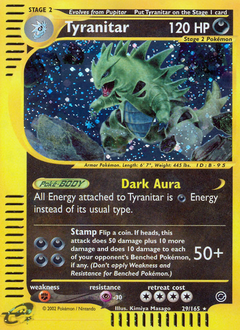
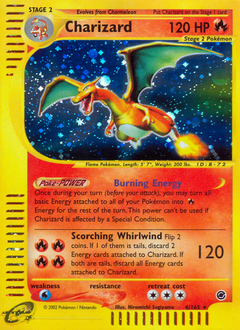
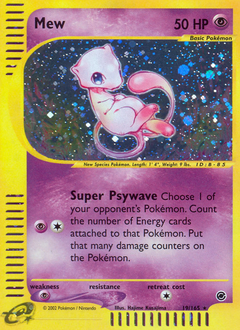
More from Expedition Base Set
Same set, same shelf.
Frequently asked questions
Answered from the data on this page — nothing here is written by hand.
How much is Gengar (Expedition Base Set #13) worth?
Gengar (Expedition Base Set #13) is worth $360 based on daily market prices (45 distinct sales) on Hoshino. Typical range: $180–$749 (raw/ungraded).
Where can I buy or sell Gengar (Expedition Base Set #13)?
You can find Gengar (Expedition Base Set #13) on Hoshino, with live listings on eBay (US), eBay CA, eBay UK, eBay AU and recent solds from eBay (US), eBay (eurozone), PokéPriceTracker, eBay UK. Each listing links directly to the seller’s page.
What is the graded value of Gengar (Expedition Base Set #13)?
Graded values for Gengar (Expedition Base Set #13): BGS 8 — $1,048; BGS 9 — $3,350; CGC 8 — $1,500; CGC 9 — $2,457; CGC 10 — $9,750; PSA 4 — $502; PSA 5 — $745; PSA 6 — $895; PSA 7 — $1,306; PSA 8 — $1,701; PSA 8.5 — $1,845; PSA 9 — $3,960. Each tier is priced on its own sales — Hoshino never mixes a PSA 10 with a raw copy.
Is Gengar (Expedition Base Set #13) going up or down in price?
Gengar (Expedition Base Set #13) is trending up in price. 30-day change: +158%. Based on live market data tracked on Hoshino.
How many Gengar (Expedition Base Set #13) have been graded?
Across PSA and CGC and BGS and SGC, 2,885 copies of Gengar (Expedition Base Set #13) have been professionally graded, based on population reports tracked on Hoshino.
What is the PSA 10 population of Gengar (Expedition Base Set #13)?
PSA has graded 84 copies of Gengar (Expedition Base Set #13) as Gem Mint 10, according to population reports tracked on Hoshino.
What does Gengar (Expedition Base Set #13) do?
Gengar (Expedition Base Set #13) is a 90 HP Psychic-type card (Stage2). Its attack is Hide in Shadows (40 damage). It is weak to Darkness (x2). Illustrated by Yukiko Baba.
📛 Get the price badge
Embeddable price badges for Gengar — pick the look, copy, paste. Live global data no US-only rival can show.


Drop any of these into a listing, blog or forum signature. Each shows the live number with its honest basis — real market price with sale-count provenance, or a clearly labelled guide estimate — and updates as new sales land (cached 1 hour). Add ?theme=light for light backgrounds.
Track Gengar in your portfolio — free
Live value across every market we track, grade-EV on your exact copy, and alerts the second the price moves.