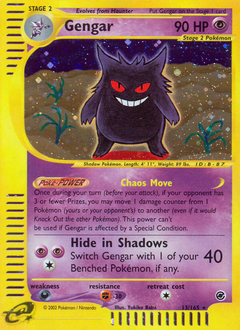
Gengar
Expedition Base Set · #13 — what it sells for at each grade from real recorded sales, what each grading route costs, and what you keep after fees on each side of the world. Full price page →
What this card actually sells for, grade by grade
One row per grade, priced on that grade's OWN recorded sales and nothing else. A grade with fewer than 3 confirmed sales gets no price — it abstains and says why. We never fill an empty grade in from the grades either side of it, because a modelled number sitting in a price column reads as an observation.
| Grade | Price | Confidence | Confirmed sales | What sits behind it |
|---|---|---|---|---|
| Raw (ungraded) | $360 | High 4/5 | 40 | 40 confirmed sales · 37 sales recorded in the last 90 days |
| PSA 10 | abstained | — | 5 | The 5 confirmed sales we hold at PSA 10 are too few or too scattered to call a price (they spread 126% around their own middle). |
| PSA 9 | abstained | — | 12 | The PSA grades we hold sales for invert — a lower grade priced at or above a higher one. That means the sales are describing different printings or the grades were mis-parsed, so the whole PSA chain abstains. |
| PSA 8.5 | abstained | — | 2 | Only 2 confirmed sales of a PSA 8.5 — below the 3 this page requires, so we publish no price and do not interpolate one from the grades either side. |
| PSA 8 | abstained | — | 25 | The PSA grades we hold sales for invert — a lower grade priced at or above a higher one. That means the sales are describing different printings or the grades were mis-parsed, so the whole PSA chain abstains. |
| PSA 7 | abstained | — | 14 | The PSA grades we hold sales for invert — a lower grade priced at or above a higher one. That means the sales are describing different printings or the grades were mis-parsed, so the whole PSA chain abstains. |
| PSA 6 | abstained | — | 14 | The PSA grades we hold sales for invert — a lower grade priced at or above a higher one. That means the sales are describing different printings or the grades were mis-parsed, so the whole PSA chain abstains. |
| PSA 5 | abstained | — | 7 | The PSA grades we hold sales for invert — a lower grade priced at or above a higher one. That means the sales are describing different printings or the grades were mis-parsed, so the whole PSA chain abstains. |
| PSA 4 | abstained | — | 6 | The PSA grades we hold sales for invert — a lower grade priced at or above a higher one. That means the sales are describing different printings or the grades were mis-parsed, so the whole PSA chain abstains. |
| PSA 3 | abstained | — | 5 | The PSA grades we hold sales for invert — a lower grade priced at or above a higher one. That means the sales are describing different printings or the grades were mis-parsed, so the whole PSA chain abstains. |
| PSA 2 | abstained | — | 5 | The PSA grades we hold sales for invert — a lower grade priced at or above a higher one. That means the sales are describing different printings or the grades were mis-parsed, so the whole PSA chain abstains. |
| PSA 1 | abstained | — | 10 | The PSA grades we hold sales for invert — a lower grade priced at or above a higher one. That means the sales are describing different printings or the grades were mis-parsed, so the whole PSA chain abstains. |
| BGS 9.5 | abstained | — | 0 | No recorded sale of a BGS 9.5 — nothing to price. |
| BGS 9 | $3,350 | High 4/5 | 7 | 7 confirmed sales (8 of them survived the outlier fence and set the price) · 1 price-guide point (a published guide figure, not a sale) · PokéPriceTracker ×6, eBay (US) ×1 · they sold between $2,125 and $5,000 · 4 sales recorded in the last 90 days |
| BGS 8 | abstained | — | 2 | Only 2 confirmed sales of a BGS 8 — below the 3 this page requires, so we publish no price and do not interpolate one from the grades either side. |
| CGC 10 | abstained | — | 2 | Only 2 confirmed sales of a CGC 10 — below the 3 this page requires, so we publish no price and do not interpolate one from the grades either side. |
| CGC 9.5 | abstained | — | 1 | Only 1 confirmed sale of a CGC 9.5 — below the 3 this page requires, so we publish no price and do not interpolate one from the grades either side. |
| CGC 9 | abstained | — | 2 | Only 2 confirmed sales of a CGC 9 — below the 3 this page requires, so we publish no price and do not interpolate one from the grades either side. |
| CGC 8.5 | abstained | — | 1 | Only 1 confirmed sale of a CGC 8.5 — below the 3 this page requires, so we publish no price and do not interpolate one from the grades either side. |
| CGC 8 | $1,500 | High 4/5 | 8 | 8 confirmed sales (7 of them survived the outlier fence and set the price) · 1 price-guide point (a published guide figure, not a sale) · PokéPriceTracker ×6, eBay (US) ×2 · they sold between $725 and $1,699 · 5 sales recorded in the last 90 days |
How confident are we in each of these prices?
There is no weighting and no hidden formula here. We ask five plain questions about the sales behind a price and the rating is simply how many we can answer yes to. Every threshold is one our pricing engine already uses to decide whether it trusts its own answer — none was invented for this rating. A grade we publish no price for gets no rating either.
- ✓ Enough sales to have a middle — 40 confirmed sales at this exact grade (the observation count beside this rung also includes 3 rows reconstructed from a listing’s own lifecycle rather than a confirmed sale — those never count toward this check)
- ✓ Those sales agree with each other — The middle half of them spread 40% around the median
- ✓ The market traded it recently — Most recent sale 34 days ago
- ✓ More than one marketplace — Sales came from 4 different marketplaces
- ✗ Dated by the venue, not by us — 36 of 40 came from venues that publish no sale date, so those dates are the day we recorded the sale — an upper bound on when it actually traded
- ✓ Enough sales to have a middle — 7 confirmed sales at this exact grade
- ✓ Those sales agree with each other — The middle half of them spread 41% around the median
- ✓ The market traded it recently — Most recent sale 29 days ago
- ✓ More than one marketplace — Sales came from 2 different marketplaces
- ✗ Dated by the venue, not by us — 1 of 7 came from venues that publish no sale date, so those dates are the day we recorded the sale — an upper bound on when it actually traded
- ✓ Enough sales to have a middle — 8 confirmed sales at this exact grade
- ✓ Those sales agree with each other — The middle half of them spread 18% around the median
- ✓ The market traded it recently — Most recent sale 5 days ago
- ✓ More than one marketplace — Sales came from 2 different marketplaces
- ✗ Dated by the venue, not by us — 2 of 8 came from venues that publish no sale date, so those dates are the day we recorded the sale — an upper bound on when it actually traded
Each price is the recency-weighted median of that grade’s own confirmed sales, after an outlier fence drops the freak results at either end — so a recent sale counts for more than an old one, and one strange price cannot move the number. The count beside it is how many confirmed sales sit behind it, and the range is what they actually printed. It is the same figure the grading engine below prices from, so every line of arithmetic on this page starts here.
Every grading route, costed
Fees, turnaround and declared-value caps are the real published schedules. "Keep if 10 / 9 / 8" is what you would be left with in that scenario: the recorded price at that grade, less the selling fee, less what the card cost you and what grading cost. Those are outcomes, not forecasts. The expected value column blends them by probability and is published only where that probability has a real basis.
| Grader route | Fee | Turnaround | Value cap | Keep if 10 | Keep if 9 | Keep if 8 | Expected value | ROI |
|---|---|---|---|---|---|---|---|---|
| CGC Economy | $17.00 | 90d | $200 | — | — | $936 | We cannot publish a price for a CGC 10 or a CGC 9 of this card — no CGC slab of it has sold often enough for us to price one, and both are needed to weigh this route, so it abstains. | |
| BGS Base | $17.95 | 75d | $500 | — | $2,539 | — | We cannot publish a price for a BGS 10 of this card — no BGS slab of it has sold often enough for us to price one, and both are needed to weigh this route, so it abstains. | |
| PSA Japan Value · submitted in Japan | $31.00 | 45d | $500 | — | — | — | We cannot publish a price for a PSA 10 or a PSA 9 of this card — see the abstention on those rungs above, and both are needed to weigh this route, so it abstains. | |
| BGS Standard | $34.95 | 45d | $1,500 | — | $2,522 | — | We cannot publish a price for a BGS 10 of this card — no BGS slab of it has sold often enough for us to price one, and both are needed to weigh this route, so it abstains. | |
| CGC Standard | $35.00 | 25d | $1,000 | — | — | $918 | We cannot publish a price for a CGC 10 or a CGC 9 of this card — no CGC slab of it has sold often enough for us to price one, and both are needed to weigh this route, so it abstains. | |
| PSA Japan Regular · submitted in Japan | $70.00 | 10d | $1,499 | — | — | — | We cannot publish a price for a PSA 10 or a PSA 9 of this card — see the abstention on those rungs above, and both are needed to weigh this route, so it abstains. | |
| BGS Express | $79.95 | 10d | $2,500 | — | $2,477 | — | We cannot publish a price for a BGS 10 of this card — no BGS slab of it has sold often enough for us to price one, and both are needed to weigh this route, so it abstains. | |
| PSA Regular | $79.99 | 35d | $1,500 | — | — | — | We cannot publish a price for a PSA 10 or a PSA 9 of this card — see the abstention on those rungs above, and both are needed to weigh this route, so it abstains. | |
| PSA Express | $149.00 | 10d | $2,500 | — | — | — | We cannot publish a price for a PSA 10 or a PSA 9 of this card — see the abstention on those rungs above, and both are needed to weigh this route, so it abstains. | |
| PSA Super Express | $349.00 | 8d | $5,000 | — | — | — | We cannot publish a price for a PSA 10 or a PSA 9 of this card — see the abstention on those rungs above, and both are needed to weigh this route, so it abstains. | |
| PSA Walk-Through | $599.00 | 6d | $10,000 | — | — | — | We cannot publish a price for a PSA 10 or a PSA 9 of this card — see the abstention on those rungs above, and both are needed to weigh this route, so it abstains. | |
Population on record: PSA 10 × 84, PSA 9 × 455, PSA 8 × 577, PSA 7 × 470, PSA 6 × 372, PSA 5 × 229, PSA 4 × 10⁵, PSA 3 × 57.
Cost basis used: $343 — the median of the confirmed ungraded sales we hold, because you have not told us what you paid. Selling venue modelled: eBay at 13.25% plus $0.40; shipping $5.00.
Grade it — then sell it where?
The half of the question a one-market calculator cannot answer. Hoshino holds Japanese and Western recorded sales for the same card at the same grade. Each side is priced on its own sales, netted at that side's real selling fee. Fee-net only: cross-border shipping, import duty and customs are not modelled, and a side without enough confirmed sales abstains rather than being estimated from the other.
The same card in a different grader’s holder
Two graders can slab the same card at the same grade and the market pays differently for each. Every price below is the figure the ladder above publishes — a rung that abstains there abstains here — netted at the real selling fee of the venue those slabs actually sold on. Where the two graders’ slabs trade in different markets, the freight and import tax for that corridor are in the conversion cost.
CGC 8 vs PSA 8
BGS 8 vs PSA 8
BGS 9 vs PSA 9
Questions people actually ask about grading Gengar
Is Gengar (Expedition Base Set) worth grading?
We will not answer that with a number for this card. The 5 confirmed sales we hold at PSA 10 are too few or too scattered to call a price (they spread 126% around their own middle). Where a grade has too few confirmed sales of its own, we publish no price for it and we do not interpolate one from the grades either side. Hoshino reports recorded transactions. Nothing here is investment advice, a valuation, or a prediction of what grade any individual card will receive.
What does a PSA 10 Gengar sell for?
We do not publish one. The 5 confirmed sales we hold at PSA 10 are too few or too scattered to call a price (they spread 126% around their own middle).
PSA or CGC for Gengar?
On fees, the cheapest modelled routes are CGC Economy at $17.00 and PSA Japan Value at $31.00. On resale we cannot compare them for this card: Only 2 confirmed sales of a CGC 10 — below the 3 this page requires, so we publish no price and do not interpolate one from the grades either side. We will not estimate what a CGC slab of it would fetch from PSA sales — a different slab is a different market.
Should I sell Gengar in Japan or the West?
We cannot answer that for this card. Both sides have to clear the same evidence bar independently, and this card does not have enough confirmed sales on both sides of the world at the same grade.
How much does it cost to grade a card?
The fees we model, dated and taken from each grader's published schedule: CGC Economy $17.00 (90 business days, declared value up to $200); BGS Base $17.95 (75 business days, declared value up to $500); SGC (vintage) $30.00 (20 business days, declared value up to $1,500); PSA Japan Value $31.00 (45 business days, declared value up to $500); BGS Standard $34.95 (45 business days, declared value up to $1,500); CGC Standard $35.00 (25 business days, declared value up to $1,000); PSA Japan Regular $70.00 (10 business days, declared value up to $1,499); BGS Express $79.95 (10 business days, declared value up to $2,500); PSA Regular $79.99 (35 business days, declared value up to $1,500); PSA Express $149.00 (10 business days, declared value up to $2,500); PSA Super Express $349.00 (8 business days, declared value up to $5,000); PSA Walk-Through $599.00 (6 business days, declared value up to $10,000). Shipping is modelled at $5.00 per card. A service whose current fee we do not hold abstains from this page rather than being priced with a guess.
Can you tell me what grade my copy will get?
No, and nobody can. We have not seen your card. The chance of a 10 used on this page is 1%, drawn from the recorded population for this card — how many copies have actually come back at each grade. Where we hold no population data and you have told us nothing about your copy, we publish the per-outcome numbers and withhold the blended expectation instead of inventing a probability. Hoshino reports recorded transactions. Nothing here is investment advice, a valuation, or a prediction of what grade any individual card will receive.
What the words on this page mean
- Confirmed sale
- A completed transaction we recorded on a venue we track. Every GRADE price on this page is built from these and nothing else. The one figure that can come from somewhere else is the ungraded price, where a card has never sold raw on a venue we track but a marketplace publishes a guide figure for it — that row says so, and so does the cost-basis line that uses it.
- Inferred sale
- A sale reconstructed from a listing disappearing. Counted separately, never treated as confirmed, and never used to reach the minimum of 3.
- Price-guide point
- A marketplace's own published market or trend figure. Useful, but it is not a sale and is never printed as one.
- Asking price
- A live listing. What someone wants, not what anyone paid. It is not used on this page at all.
- Abstained
- We hold data, but not enough of it at that exact grade to state a price. We say so instead of interpolating from the grades either side.
- Expected value
- The average across grade outcomes weighted by how likely each is. It is not what you will get. Individual outcomes are the "keep if 10 / 9 / 8" columns.
Hoshino reports recorded transactions. Nothing here is investment advice, a valuation, or a prediction of what grade any individual card will receive.